
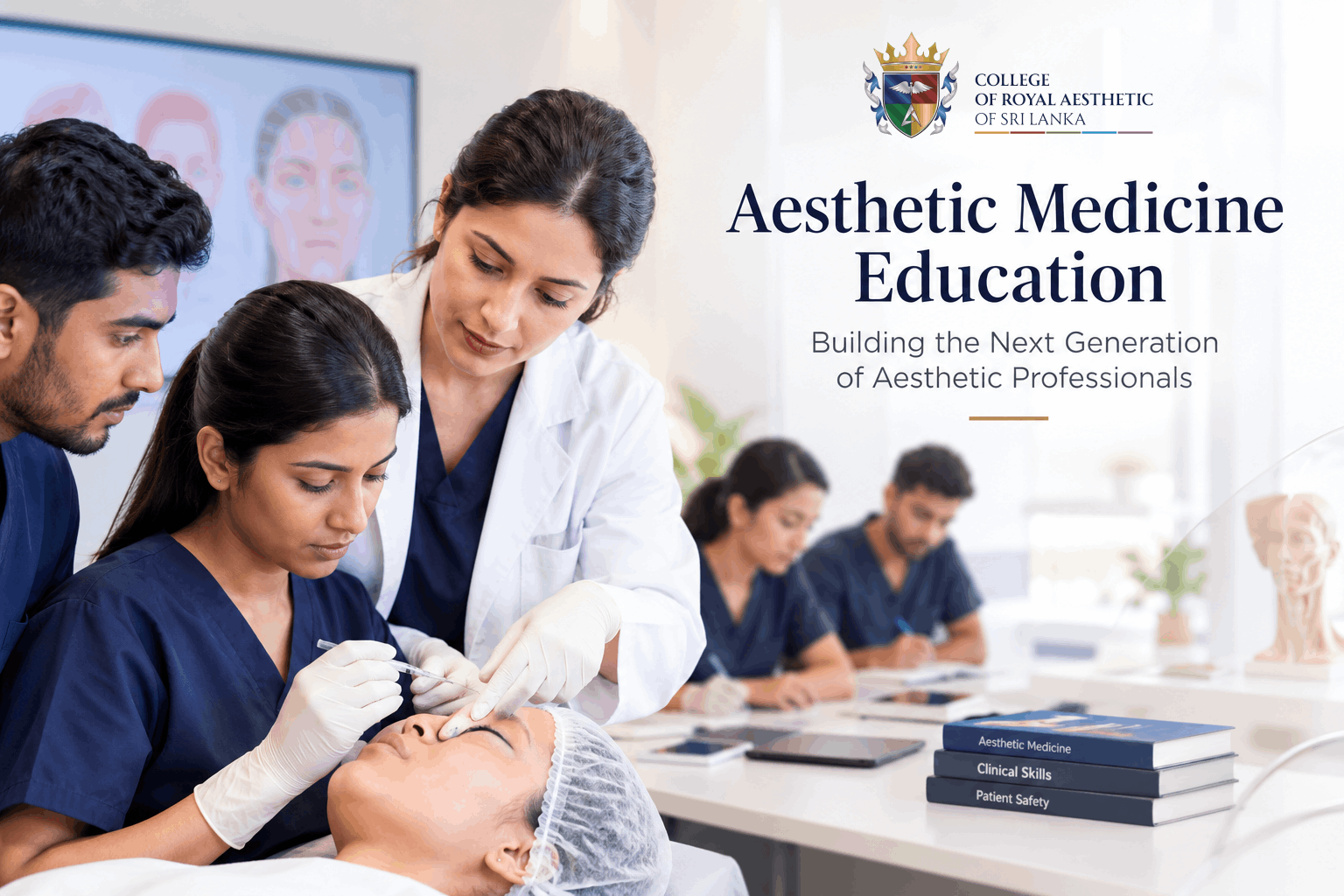
Aesthetic Medicine: Where Science, Skills and Professional Practice Meet The Future of Aesthetic Healthcare Begins with Education
Aesthetic medicine has evolved significantly over the past decade. What was once considered a niche area of cosmetic care has developed into a sophisticated multidisciplinary field that combines medical science, technology, clinical skills, patient assessment and an understanding of facial and body aesthetics.
Today, patients are increasingly seeking evidence-based aesthetic treatments that are safe, personalised and professionally delivered. This growing demand has created an equally important need: properly educated and appropriately trained professionals who understand not only how to perform aesthetic procedures, but also when, why and for whom a procedure should be performed.
This is where professional aesthetic education becomes essential.
What Is Aesthetic Medicine?
Aesthetic medicine is a multidisciplinary area of healthcare focused on improving, maintaining or restoring aspects of a person's appearance and wellbeing through clinically appropriate interventions.
Depending on professional scope of practice and applicable regulations, aesthetic practice may include areas such as:
- Skin health and rejuvenation
- Laser and light-based procedures
- Hair and scalp treatments
- Hair restoration and transplantation
- Facial aesthetic procedures
- Injectable treatments
- Body contouring and wellness
- Micropigmentation and permanent makeup
- Aesthetic cosmetology
- Regenerative and restorative approaches
Modern aesthetic practice is not simply about appearance. It involves patient assessment, treatment planning, risk management, infection prevention, clinical decision-making, informed consent, documentation, aftercare and ethical professional conduct.
Aesthetic Medicine Is More Than Performing a Procedure
One of the most important developments in aesthetic healthcare is the recognition that technical skills alone are not enough.
A practitioner may learn how to operate a device or perform a particular procedure, but professional practice requires a much broader understanding.
A competent aesthetic practitioner should understand:
· Assessment
· Indication
· Contraindication
· Treatment Planning
· Technique
· Safety
· Documentation
· Follow-up
Every treatment begins with the patient not with the procedure.
Understanding the patient's concerns, expectations, medical history, skin or hair condition, treatment objectives and potential risks is fundamental to responsible aesthetic practice.
Why Structured Education Matters
The rapid growth of aesthetic medicine has also resulted in a growing number of short courses, workshops and informal training programmes.
While short practical courses can introduce specific techniques, professional development should ideally be supported by a structured educational framework that combines:
- Theoretical knowledge
- Practical skills
- Supervised clinical exposure
- Patient assessment
- Safety and risk management
- Professional ethics
- Evidence-based practice
- Documentation and clinical governance
- Continuous professional development
Education should therefore move beyond "learning a procedure" towards "developing professional competence."
Understanding Qualification, Competence and Scope of Practice
An important distinction in aesthetic education is the difference between obtaining a qualification and being legally authorised to perform a particular procedure.
A certificate or diploma demonstrates completion of an educational programme. However, the right to practice a specific procedure depends on the individual's underlying professional qualification, registration, licence, scope of practice and the laws and regulations applicable in the jurisdiction where the service is provided.
Therefore, responsible aesthetic education must promote an important principle.
Education develops competence; regulation determines professional scope of practice.
At the College of Royal Aesthetic, this distinction is an important part of our educational philosophy. Our objective is not simply to teach techniques, but to encourage learners to understand professional responsibility, patient safety, ethical practice and the regulatory environment surrounding aesthetic healthcare.
Introducing the College of Royal Aesthetic
The College of Royal Aesthetic (CRAS) was established with a vision to contribute to the development of structured and professional aesthetic education in Sri Lanka.
CRAS brings together education, practical skills development and professional practice within a dedicated aesthetic learning environment.
The College focuses on developing knowledge and practical competence across areas including aesthetic medicine, laser and light-based technologies, aesthetic cosmetology, hair restoration, skin health and other specialised areas of aesthetic practice.
CRAS is committed to building an educational environment where learners can progress from foundational knowledge to practical application through structured training.
Education Designed Around Professional Practice
At CRAS, aesthetic education is approached as a progression rather than a single classroom experience.
1. Knowledge
Learners develop a foundation in relevant anatomy, physiology, skin and hair science, aesthetic principles, treatment technologies and patient considerations.
2. Practical Skills
Theory is complemented by practical demonstrations, hands-on learning and skills development appropriate to the programme.
3. Clinical Application
Where applicable, learners are introduced to supervised practical experience and patient-centred treatment processes.
4. Safety and Risk Management
Aesthetic procedures must be performed with an understanding of potential complications, contraindications, infection prevention and appropriate safety measures.
5. Professional Practice
Learners are encouraged to develop appropriate communication, documentation, consent, treatment planning and professional conduct.
6. Continuing Development
Aesthetic medicine continues to evolve. Professional learning therefore should not end when a course is completed.
A Multidisciplinary Approach to Aesthetic Education
Aesthetic healthcare brings together professionals from different backgrounds.
Depending on the procedure and jurisdiction, aesthetic environments may involve medical practitioners, nurses, allied health professionals, aesthetic practitioners, laser professionals, cosmetologists, therapists and other appropriately qualified personnel.
Each professional has a different educational pathway and scope of practice.
CRAS therefore believes that aesthetic education should respect professional boundaries while encouraging multidisciplinary collaboration.
The goal is not to replace one profession with another. The goal is to create a professional ecosystem in which appropriately trained individuals understand their responsibilities and work within their permitted scope.
Technology Is Changing Aesthetic Practice
The aesthetic industry is experiencing rapid technological advancement.
Laser and light-based systems, energy-based devices, advanced skincare technologies, digital assessment tools and emerging regenerative approaches are changing the way aesthetic services are delivered.
However, technology should never replace professional judgement. The availability of a sophisticated device does not automatically make a treatment appropriate for every patient.
Professionals must understand:
· What the technology does.
· Who may benefit from it.
· Who may be unsuitable.
· What risks are involved.
· How the treatment should be planned.
· How outcomes should be monitored.
Technology is most valuable when it is combined with knowledge, competence and responsible clinical practice.
The Patient Must Remain at the Centre
Aesthetic medicine is ultimately about people.
Patients may seek treatment because of concerns about ageing, skin conditions, hair loss, body appearance, scars, pigmentation or other aesthetic concerns. These concerns can have a significant impact on confidence and quality of life.
For this reason, aesthetic professionals must approach every patient with respect, realistic communication and ethical responsibility. Good aesthetic practice means avoiding unrealistic promises and ensuring that patients understand:
- What the treatment can realistically achieve
- What the treatment cannot achieve
- Possible risks and complications
- Alternative options
- Expected recovery
- Potential need for multiple sessions
- Aftercare requirements
- When referral to another healthcare professional may be necessary
The best aesthetic outcome is not necessarily the most dramatic outcome.
The best outcome is one that is appropriate, safe, realistic and aligned with the patient’s needs.
Building the Next Generation of Aesthetic Professionals
The future of aesthetic healthcare will require professionals who are able to combine technical ability with critical thinking, communication and professional responsibility.
At CRAS, we believe that education should help learners develop:
Knowledge + Skills + Clinical Awareness + Ethics + Professionalism
This philosophy supports our commitment to structured aesthetic education and continuous professional development.
Our programmes are designed to provide learners with opportunities to build their knowledge and practical capabilities within an educational framework that emphasises safety, competence and responsible practice.
Our Vision
The College of Royal Aesthetic aims to contribute to the professionalization of aesthetic education by promoting structured learning, practical skills development, patient-centred care and lifelong professional development.
We believe that the future of aesthetic medicine should be built on:
· Evidence.
· Education.
· Competence.
· Safety.
· Ethics.
· Innovation.
Aesthetic medicine is moving forward rapidly. The professionals who will shape its future are not simply those who can perform procedures they are those who understand the science behind them, recognize their limitations, respect professional scope and place patient safety at the centre of every decision.
Begin Your Journey in Aesthetic Education
Whether you are a healthcare professional seeking to expand your knowledge, an aesthetic practitioner looking to develop advanced skills, or an experienced professional seeking structured education in a specialised area, the right educational foundation can make a significant difference to your professional journey.
The College of Royal Aesthetic advancing aesthetic education through knowledge, skills and professional practice.
Explore our programmes, professional courses and continuing education opportunities at www.CRAS.lk.
.Recent Events
-
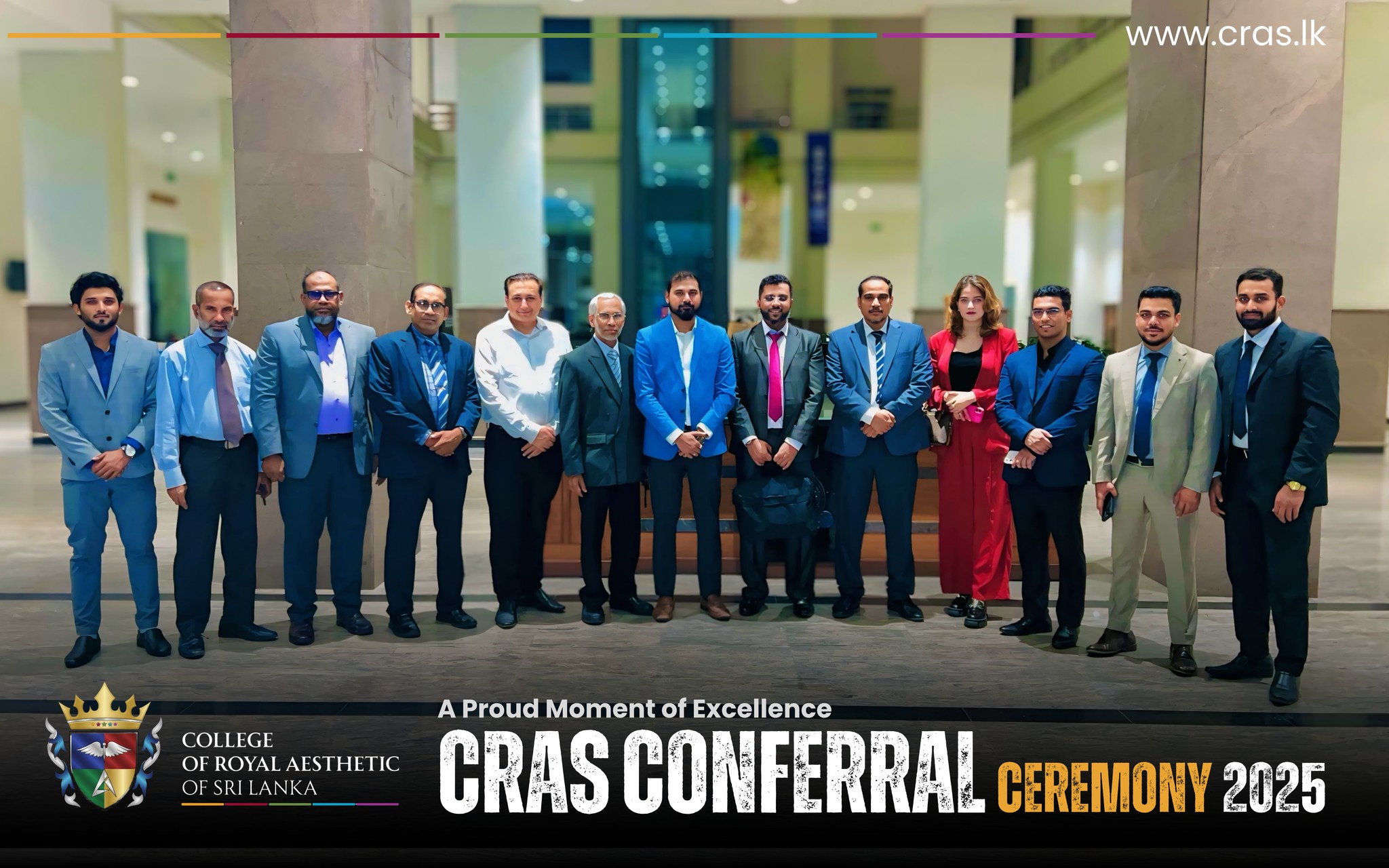
CRAS Conferral Ceremony Celebrates Excellence...
19 May, 2026
-

Why Doctors Are Choosing Aesthetic Medicine E...
13 May, 2026